The Story of the Coulter Name
From the Iron Blade to the American Frontier
Long before the name Coulter was etched into the ink of American census records or the vellum of family Bibles, it lived in the wind-swept glens of Scotland. It is a name born of the borderlands—a rugged geography where the Gaelic and Scots tongues collided, and where survival was a pact made between a family and the earth.
I. The Blade That Breaks the Earth
The story begins with a simple, vital tool: the coulter. In the Middle Ages, this was the sharp iron blade fixed to the front of a heavy plow. Before the plowshare could turn the earth, the coulter had to slice through the stubborn sod. It was the pioneer of the field—the part of the machine that met the world with courage and sharp intent.
From this tool came a title, and from that title, a legacy.
II. A Name Born of Work and Worth
In the dawn of surnames, identity was forged in the heat of the smithy or the sweat of the furrow. To be called “Coulter” was to be recognized for skill and reliability:
- The Craftsman: The smith who forged the iron blades.
- The Tiller: The man whose steady hand guided the blade through the soil.
Over generations, the name became synonymous with the quiet dignity of labor. It belonged to people who coaxed life from the stones and understood the rhythmic language of the seasons.
III. The “Back Land” of Lanarkshire
While some Coulters took their name from the forge, others took it from the hills. In South Lanarkshire, Scotland, lies the village of Coulter. Its name stems from the Gaelic cùl tìr, meaning “the back land.”
It was a settlement tucked against the rising slopes—a place on the edge of the wild. For those who lived there, “Coulter” was a mark of home, a geographical anchor that traveled with them even when the hills of Scotland faded from view. These two origins—the Occupational and the Geographical—intertwined to form the DNA of the clan.
IV. The Great Migration: Ulster and Beyond
In the 1600s, political and religious storms drove waves of Scottish families across the narrow North Channel to Ulster, Ireland. Among these migrants were the Coulters. In the green valleys of Ireland, the spelling began to shift—Colter, Coalter, Coulter—but the spirit of the family remained unyielding.
These families became the Scots-Irish: a people defined by a fierce independence and a restless need to move toward the horizon. They did not just inhabit a landscape; they transformed it.
V. Breaking the American Soil
By the early 1700s, the name Coulter was crossing the Atlantic. They arrived in the ports of Pennsylvania and Virginia, then pushed like the plow itself into the heart of the continent:
- They carved homesteads out of the Appalachian frontier.
- They built the mills and smithies of the Carolinas and Tennessee.
- They served as the “front guard” of a new nation—farmers, soldiers, and builders.
Wherever they settled, they honored their namesake: they were the ones who opened the way.
The Coulter Legacy
To bear the name Coulter today is to be a steward of a centuries-old inheritance. It is a name shaped by:
- Workmanship – The precision of the ironworker.
- Stewardship – The patience of the one who tends the land.
- Resilience – The strength to migrate, adapt, and begin again.
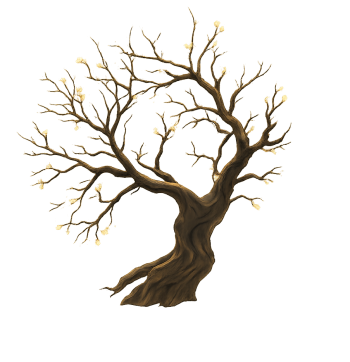
It is a name of land, labor, and legacy—a name that started as a blade in the dirt and grew into a family tree that spans the world.
 Whispers in The Branches